 Rare Leaf
How to Propagate Monstera: Nodes, Aerial Roots, Cutting Types and Air Layering
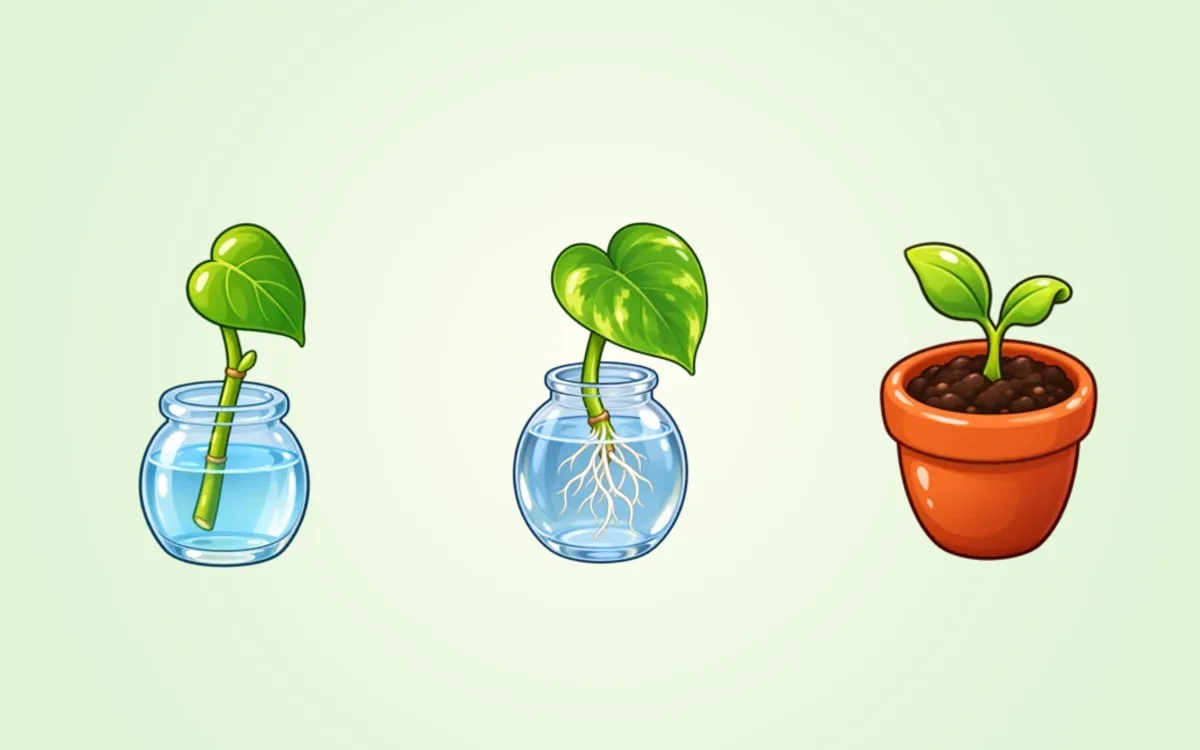
Monstera (Monstera deliciosa) grows fast, and sooner or later it outgrows its moss pole. That long stem is a new plant waiting to happen. Propagating monstera is easy once you know where to cut, and nearly everything comes down to one spot on the stem: the node.
Anatomy of a monstera cutting
Node: the point on the stem where a leaf develops (University of Minnesota Extension). The stretch of stem between two nodes is the internode.
Axillary bud: sits at the node, just above where the leaf attaches. That’s where the new shoot will come from. University of Minnesota Extension notes that monstera leaves and petioles won’t grow on their own, because new growth only comes from nodes and axillary buds. No node, no plant.
Aerial root: the brown, often long root growing out of the node into the air. In the wild, monstera uses these to attach to tree trunks. You don’t need one, but it helps. UConn’s Home & Garden Education Center says monstera “roots aggressively both in soil and aerially” and recommends cuttings with as many aerial roots as possible.
Types of monstera cuttings
| Cutting type | What it includes | Odds of success | Notes |
|---|---|---|---|
| Tip cutting | stem tip, 1–3 leaves, node, ideally an aerial root | high | leaves fuel rooting through photosynthesis |
| Mid-stem cutting | stem section with a node and a leaf | high | new shoot grows from the axillary bud |
| Leafless node | stem piece with node and bud | possible, slower start | no leaf means no photosynthesis to support rooting |
| Leaf with petiole only | no node | none | may grow roots but never a plant |
University of Minnesota Extension recommends leaving multiple leaves on the cutting, since photosynthesis promotes better rooting.
Step by step: stem cuttings
University of Minnesota Extension says you can take monstera cuttings any time of year. The RHS recommends spring through late summer, when the plant is actively growing.
- Find a node with an axillary bud, ideally one that already has an aerial root.
- Cut 1 to 2 inches below the node, through the internode, with a clean, sharp blade.
- Rooting hormone (optional): if you use auxin, rub it onto the node.
- Prep the medium: moisten it, make a hole, and insert the cutting so the node is buried.
- Stake it right away. Monstera cuttings are top-heavy. Use a heavy pot (terracotta, glazed ceramic) and tie the cutting to a bamboo stake.
- Check for roots by gently lifting the cutting with a spatula or plant label. No roots yet? Put it back.
Water vs. perlite vs. LECA vs. soil
University of Minnesota Extension compares four rooting media:
- Perlite: the most common medium for monstera cuttings. It supports the cutting and supplies oxygen and moisture.
- Potting soil: supports roots and drains well. Keep it moist, but cold, soggy soil can cause damping off.
- LECA: drains so well you can water more often without raising the risk of damping off. More expensive, but reusable.
- Water: you can watch roots grow, and it’s low-maintenance. Change the water when it gets cloudy. The catch: roots grown in water are weaker than those grown in a solid medium.
The RHS keeps it simple: stand monstera cuttings in a glass of water in a bright spot until they have a good set of roots, then pot them up. For a broader comparison, see houseplant propagation methods.
Caring for your cutting
- Moisture: keep the medium continually moist for the first 1–2 weeks, then let the top dry out between waterings (University of Minnesota Extension).
- Light: bright and warm, out of direct sun. The same source suggests north- or east-facing windows.
- Temperature: the RHS recommends 65–77°F (18–25°C) year-round, away from cold drafts and radiators.
- Winter: if you propagate in late fall or early winter, University of Minnesota Extension suggests about 2–3 hours of supplemental light a day.
What healthy roots look like: creamy white and firm. Brown and soft means you’re overwatering or the pot isn’t draining. A cutting with root rot may not survive, and you may be better off taking a new one.
Expect roots in roughly 2–4 weeks. The first new leaf can take 2–3 months.
How to air layer a monstera
Don’t want to cut blind? Air layer instead. University of Minnesota Extension lists air layering as an easy option for monstera. The new plant roots while still attached to the mother, and you only cut once roots are there.
These steps follow the general RHS and Clemson HGIC methods:
- Choose a node, ideally with an aerial root, on the section you want to separate.
- Soak sphagnum moss for several hours, then wring it out (Clemson).
- Wound the stem at the node. The RHS describes a 1-inch angled cut toward the tip, with a little damp moss tucked under the flap.
- Wrap the area in damp sphagnum, cover with plastic, and tape or tie both ends. You can tuck the aerial root into the moss too.
- Check weekly that the moss stays moist (Clemson).
- Once roots are clearly visible through the moss, remove the plastic, cut just below the rooted section, and pot it up.
Clemson HGIC says air layers take several weeks to months to root, so be patient.
Potting up and repotting
Once your cutting has healthy roots and is actively growing, move it to moist potting mix. University of Minnesota Extension recommends a container at least 4 inches wide and 5 inches deep, with a drainage hole. Avoid oversized pots, which make it harder to judge moisture.
After that, repot in late winter or early spring every one to two years, into a pot about 2 inches wider. Roots coming out of the drainage holes or soil drying out within 24 hours are signs it’s time.
Propagating variegated monstera
University of Minnesota Extension mentions variegated cultivars such as ‘Thai Constellation’, ‘Albo Borsigiana’, and ‘Aurea’ (or ‘Marmorata’). Their patterns come from mutations that change the amount of chlorophyll in parts of the leaf. Some are permanent; others are temporary, because non-variegated growth can outgrow the variegation.
What that means for your cuttings:
- Choose a node with variegation on both the stem and the leaf. A plain green node on an unstable plant will most likely give you a green shoot.
- ‘Thai Constellation’ has stable variegation, according to Costa Farms. The same grower calls ‘Albo’ notoriously unstable, often producing shoots with no variegation or no chlorophyll at all. See Thai Constellation vs. Albo for the full comparison.
- Variegated seeds don’t exist. University of Minnesota Extension warns that variegation is a mutation that forms after germination, so don’t buy seeds sold as variegated.
If your mother plant starts putting out all-green leaves, read our guide to variegation reversion.
Dividing a monstera
University of Minnesota Extension also lists division, with the same rule as always: each piece must include a node. Division makes sense when one pot holds several stems, for example because the grower planted multiple cuttings together.
- Slide the plant out of its pot and loosen the root ball.
- Find where the individual stems separate.
- Split them so each piece has its own roots and at least one node.
- Pot each division in its own container with a drainage hole.
Troubleshooting monstera propagation
| Symptom | Likely cause | Fix |
|---|---|---|
| Brown, mushy roots | overwatering or poor drainage | take a new cutting, water less, use a pot with drainage |
| No roots after several weeks | too cool or too dark | warmer spot; in winter, add 2–3 hours of supplemental light |
| Cutting keeps tipping over | top-heavy cutting | heavier pot, tie to a stake |
| Base rotting in soil | cold, soggy soil (damping off) | switch to a better-draining medium like perlite or LECA |
| Cloudy water | bacteria, decaying tissue | change the water |
(Based on University of Minnesota Extension.)
Common mistakes
- Cutting without a node. The number one reason monstera propagation fails.
- No support. The cutting tips over and snaps its new roots.
- Constantly wet soil. Roots turn brown and mushy.
- Direct sun on a fresh cutting. Leaves scorch before the cutting can replace lost water.
In the game
Monstera deliciosa ‘Thai Constellation’ is one of six species in Rare Leaf Tycoon. You take cuttings from a mother plant and only see the new leaf’s pattern after the reveal: green, unstable, stable, or rare. A stable line gives a rare leaf 2% of the time; an unstable line, 8%. Growing is simplified in the game, and plants never die.
FAQ
Can you propagate a monstera from just a leaf?
No. University of Minnesota Extension explains that monstera leaves and petioles will not grow on their own, because new growth comes from nodes and axillary buds on the stem. A leaf without a node eventually rots.
Does a monstera cutting need an aerial root?
No, it needs a node. An aerial root gives it a head start, though. UConn Home & Garden Education Center recommends taking cuttings with as many aerial roots as possible.
How long does it take a monstera cutting to root?
Roots form in about 2 to 4 weeks, according to University of Minnesota Extension. A new leaf can take 2 to 3 months.
Should I propagate monstera in water or soil?
Both work. Perlite is the most common medium, and water lets you watch roots grow. Water-grown roots are weaker, so pot the cutting soon after it roots.
Will a cutting from a variegated monstera stay variegated?
It depends on the type. Costa Farms describes 'Thai Constellation' variegation as stable and 'Albo' as notoriously unstable. Pick a node that shows variegation on both the stem and the leaf.
Sources
- University of Minnesota Extension — Propagating Monstera deliciosa
- UConn Home & Garden Education Center — Monstera deliciosa
- RHS — How to grow Swiss cheese plants
- RHS — Air layering plants
- Clemson HGIC — Air Layering
- Costa Farms — Monstera Thai Constellation
Care information is general; every plant and home is different. Growing is simplified in the game.