 Rare Leaf
Variegation Reversion: Why Variegated Plants Turn Green and How to Prune Them Back
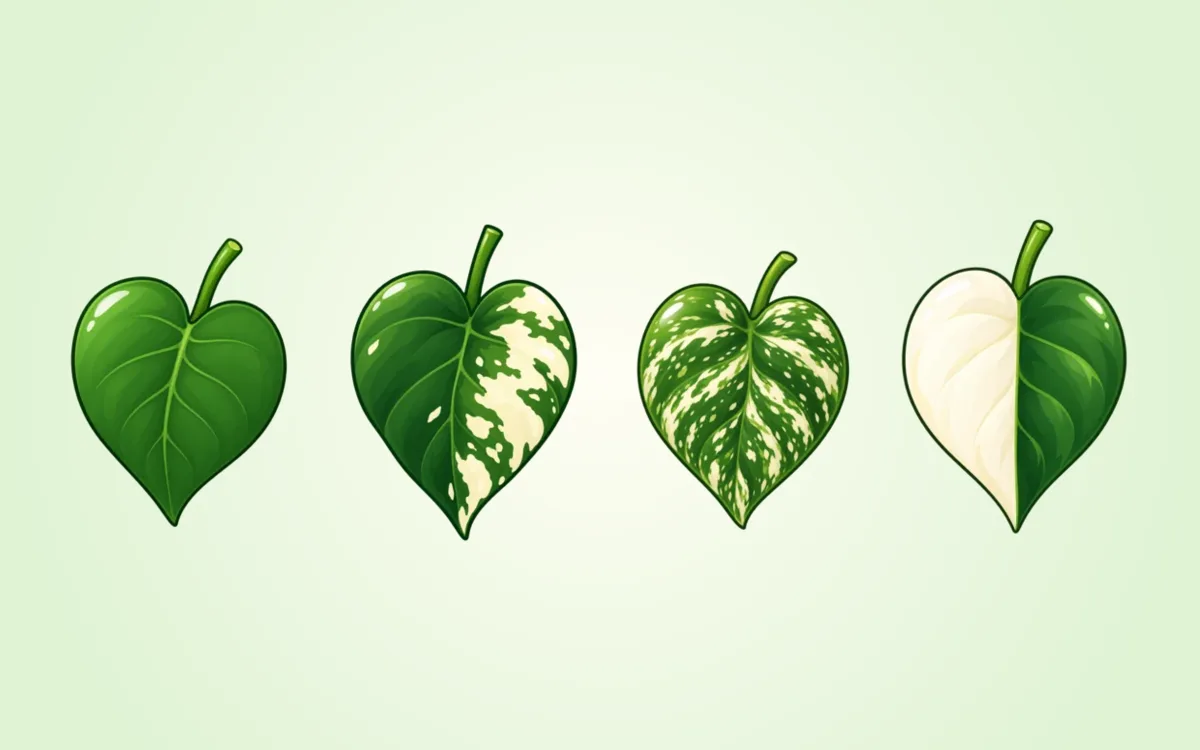
Your variegated monstera looked perfect for months. Then it pushed out a solid green leaf. Then another. That’s reversion: the plant falling back to its original all-green form. It isn’t a disease, and it usually isn’t your fault. It’s built into how variegation works. The good news is you can manage it.
What is variegation reversion?
The RHS defines reversion as a cultivar known for a particular leaf shape or color “reverting” to a form found in its parentage. Most often, it’s a variegated plant producing plain green shoots.
Why does it happen? According to the RHS, variegated cultivars are usually selected from a sport, or mutation, of a green plant. The variegated part is then propagated by cuttings, grafting, or division to keep its look. But those mutations aren’t always stable and can revert to pure green shoots.
University of Minnesota Extension says the same about monstera: some mutations change the foliage for the plant’s whole life, while others are temporary, because non-variegated growth can outgrow the variegation.
Plant chimeras, explained
The key word is chimera. University of Illinois describes it as cells of more than one genetic makeup growing side by side in the same plant tissue. In variegated plants, that usually means cells that can make chlorophyll next to cells that can’t.
A shoot tip (the meristem) has three cell layers, according to the University of Florida:
- L1 forms the epidermis (outer skin),
- L2 forms the inner layer of cells,
- L3 forms the innermost tissue and the vascular system.
Where the mutation sits, and how much of the meristem it covers, determines the type of chimera:
| Chimera type | Where the mutation is | Stability | What you see |
|---|---|---|---|
| Periclinal | an entire meristem layer | most stable | every new shoot repeats the same arrangement |
| Mericlinal | part of one layer | unstable | affects only a small part of the leaf |
| Sectorial | a section of the meristem through all layers | unstable | produces both normal and mutated shoots and leaves |
(Based on University of Illinois and University of Florida.)
University of Illinois notes that periclinal chimeras are relatively stable and can often be propagated vegetatively, which is where many variegated cultivars come from. Sectorial chimeras are unstable, and the pattern can change leaf to leaf. Collectors know that kind of unpredictability from monstera ‘Albo’, which Costa Farms calls notoriously unstable, often producing shoots with no variegation or no chlorophyll at all.
Why green always wins
Green shoots have more chlorophyll, so they make more energy and grow faster. The RHS says reverted shoots are much more vigorous than the variegated plant and can eventually take it over. University of Illinois agrees: true-to-species tissue is generally more vigorous and, left alone, may outgrow the cultivar.
Chemistry World (published by the Royal Society of Chemistry) explains it at the cell level: if the chlorophyll-free cells in the meristem divide even a little more slowly than the green ones, the plant will eventually revert to all green.
At the other extreme are all-white shoots. The RHS says they’re very weak and don’t take over the way green ones do. With no chlorophyll, though, they can’t feed the plant either.
How to prune a reverting plant
The RHS says to prune reverted shoots out completely, or cut them back into growth that still has variegated foliage. University of Illinois gives the same advice: prune back to tissue that shows the cultivar’s features.
On vining houseplants like monstera, pothos, and philodendron, that looks like this:
- Find the last well-variegated leaf on the stem, working down from the tip.
- Look at the node below it and the stem around it. Variegation on the stem itself is a good sign.
- Cut just above that node with a clean, sharp blade. Remove the green growth above the cut.
- Wait for the axillary bud to break. University of Minnesota Extension notes that new monstera growth comes from nodes and axillary buds.
- Judge the first new leaf. It will tell you whether the variegation came back. On monstera, a new leaf can take 2–3 months.
Tip: don’t toss the green top. It’s a perfectly good cutting; it will just grow into a green plant. See houseplant propagation methods.
When to act
- As soon as you spot a green shoot. The RHS notes reversion usually shows up in spring or summer, often in response to temperature swings. The earlier you cut, the less growth the plant loses.
- One green leaf isn’t a crisis. On unstable chimeras, the pattern varies from leaf to leaf (University of Illinois). A reverted shoot is one that keeps producing only plain green leaves (RHS).
Propagation can cause reversion too
How you propagate decides whether the pattern survives. Take yellow-edged snake plants (Dracaena trifasciata, formerly Sansevieria), like ‘Laurentii’. Iowa State University Extension notes they lose their yellow edge when grown from leaf cuttings, because the variegation is a chimera. Division keeps the pattern.
For vining aroids, the rule is simple: take cuttings from nodes that show variegation on both the leaf and the stem. A plain green node will most likely give you a green plant. See how to propagate monstera and how to propagate pothos.
Stable vs. unstable variegation
| Stable variegation | Unstable variegation | |
|---|---|---|
| Example | Monstera deliciosa ‘Thai Constellation’ | Monstera deliciosa ‘Albo’ |
| Per the source | stable (Costa Farms) | notoriously unstable (Costa Farms) |
| Reversion risk | low | high |
| Leaves | similar pattern on every leaf | every leaf different, from green to white |
| Upkeep | normal care | regular checks and pruning |
For a full comparison, see Thai Constellation vs. Albo. To learn how stable variegation is mass-produced in labs, read houseplant tissue culture.
What won’t stop reversion
To be honest, no care routine reliably prevents reversion, because it’s rooted in the plant’s genetics. University of Minnesota Extension notes variegated monsteras grow more slowly because they have less chlorophyll, so give them plenty of bright, indirect light to fuel the variegated growth. But keep checking for green shoots and prune them when they appear.
Quick diagnosis
| What you see | What it means | What to do |
|---|---|---|
| A shoot with only plain green leaves | reversion | prune it out or cut back to variegated growth (RHS) |
| An all-white shoot or leaf | chlorophyll-free, weak tissue | won’t take over (RHS), but can’t feed the plant; favor growth from a variegated node |
| Pattern changes from leaf to leaf | unstable chimera | normal; watch for a shoot going fully green |
| Snake plant leaf cutting with no yellow edge | leaf cuttings don’t carry the chimera | propagate variegated plants by division (Iowa State) |
| Green growth outpacing the variegated part | true-to-species tissue is more vigorous | cut back to variegated tissue (University of Illinois) |
Pruning isn’t one and done
On unstable chimeras, expect green shoots to keep coming back. University of Florida cites Euonymus as an example of an unstable periclinal chimera that needs periodic pruning to keep its variegation. For houseplants, make it a habit: every time you water, check the newest leaves.
In the game
In Rare Leaf Tycoon, instability is the whole point. Every cutting from a mother plant only shows its pattern after the reveal. A stable line gives a green leaf just 5% of the time and a stable pattern 76% of the time. An unstable line gives a green leaf 20% of the time, but also an 8% chance at a rare half-moon, sector, or ray pattern. No pruning required: you just decide which line to take cuttings from.
FAQ
What does it mean when a variegated plant reverts?
Reversion means a variegated cultivar starts producing plain green shoots like the plant it came from. The RHS explains that the mutations behind variegated cultivars are not always stable.
Can a reverted plant get its variegation back?
Do not count on it. The RHS says reverted shoots are more vigorous and can eventually take over the whole plant, so it recommends pruning them out or cutting back to variegated growth.
Where should I cut a reverted shoot?
The RHS and University of Illinois both say to cut back to growth that still shows the variegation. On a vining houseplant, that usually means cutting just above a node with a variegated leaf.
Should I remove all-white leaves?
All-white shoots are very weak and will not take over the plant the way green ones do (RHS). Since they have no chlorophyll, they cannot feed the plant, so new growth from a variegated node is the better long-term bet.
Why did my snake plant lose its yellow edge after propagation?
Yellow-edged snake plants like 'Laurentii' are chimeras, and leaf cuttings do not carry that pattern over. Iowa State University Extension recommends dividing them instead.
Sources
- RHS — Reversion
- University of Illinois — Home, Yard & Garden Newsletter: Chimeras
- University of Florida IFAS — Genetic chimeras (Plant Propagation)
- Iowa State University Extension — Caring for Sansevieria
- University of Minnesota Extension — Propagating Monstera deliciosa
- Chemistry World (Royal Society of Chemistry) — The plant trade’s scientific secrets
- Costa Farms — Monstera Thai Constellation
Care information is general; every plant and home is different. Growing is simplified in the game.