 Rare Leaf
How to Repot Houseplants: When, What Size Pot, and Step-by-Step
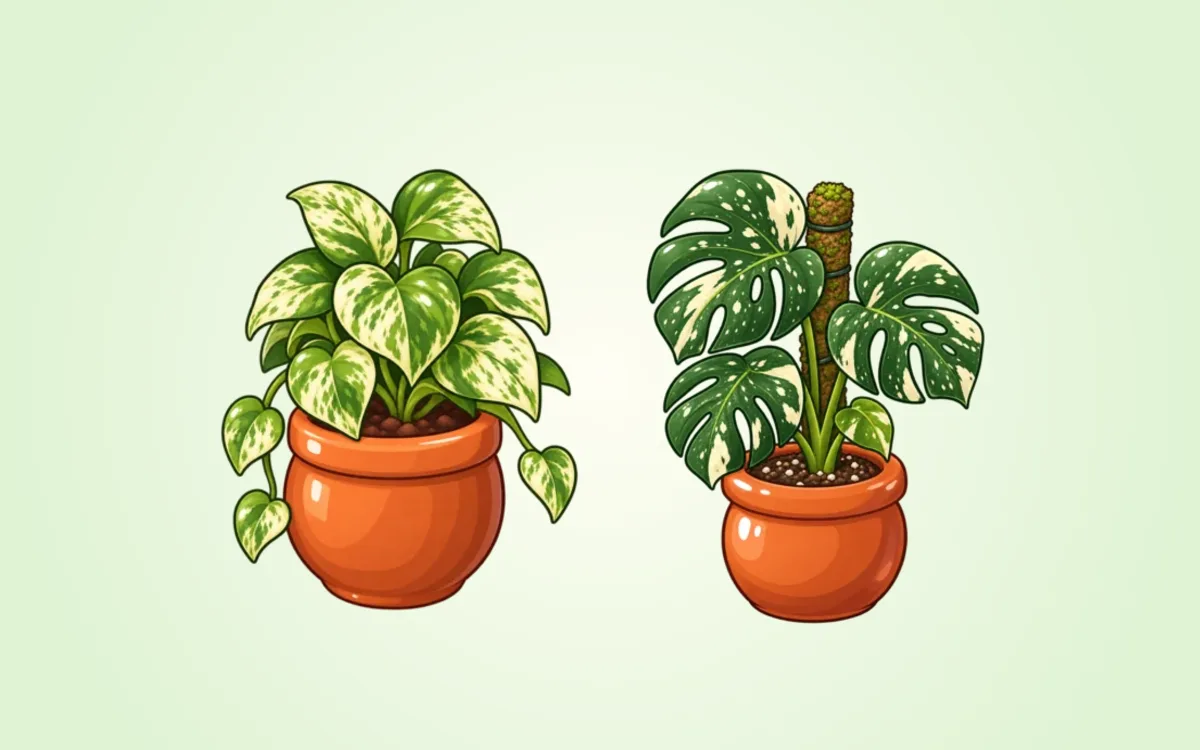
Repotting gives roots room to grow and fresh potting mix to grow in. Put it off too long and a plant stalls, drying out no matter how often you water. Repot too often, or into a pot that’s too big, and you risk soggy soil. Here’s how to tell when it’s time and how to do it without setting your plant back.
Signs Your Houseplant Needs Repotting
A root-bound (pot-bound) plant shows some combination of these:
| Sign | Source |
|---|---|
| Potting mix dries out very quickly, even with frequent watering | Penn State Extension, Missouri Botanical Garden |
| Roots growing out of the drainage holes | Penn State Extension, Clemson HGIC, RHS |
| Roots forming a solid mass or circling the sides and bottom | Clemson HGIC, RHS |
| Plant wilts shortly after watering | Clemson HGIC |
| Very slow leaf and stem growth | Missouri Botanical Garden |
| Water runs straight through without soaking in | University of Maryland Extension |
| Browning leaf edges and tip dieback | University of Maryland Extension |
The surest check is to slide the plant out of its pot and look. If roots wrap the whole root ball and you can barely see any soil, it’s time.
How Often to Repot
Sources differ because they’re talking about different-sized plants:
- Missouri Botanical Garden: yearly for plants in pots up to 10 inches across; every two years for large container plants.
- RHS (houseplants): every two to three years.
- RHS (container plants in general): every three to five years is suitable for most.
With fast growers like pothos, check the roots more often. The RHS says a monstera can stay in its original pot for a year or two, then needs repotting every few years. Philodendrons can usually go at least a couple of years, until the roots are densely packed. For alocasias, the RHS suggests repotting every couple of years as needed.
Best Time of Year
Spring is ideal, when plants start actively growing and can fill the new space (RHS, Penn State Extension). Clemson HGIC recommends repotting only in spring and summer, and not repotting plants that are sick, dormant, or flowering.
Choosing the Right Pot Size
- For pots under 10 inches across, go 1 to 2 inches wider and deeper (RHS, Clemson HGIC).
- The new pot should be no more than a third larger than the old one (RHS).
- For monstera, the RHS recommends a pot only a few centimeters (about an inch) larger and warns that overpotting keeps the compost wet too long.
- Top-heavy plants need a heavier pot so they don’t tip over (RHS).
- The pot must have a drainage hole (Penn State Extension, Illinois Extension).
Pot material: Penn State Extension says terracotta is ideal for succulents and plastic for plants that like to stay moist. Mix dries out faster in terracotta.
What Potting Mix to Use
The RHS says most houseplants do fine in standard potting mix, with a few exceptions:
- Tall, top-heavy plants are best potted into a peat-free, loam-based (soil-based) mix, which is heavier and gives more stability.
- Acid-loving plants need an ericaceous (acidic) mix, or their leaves may yellow.
- Aroids such as monstera and philodendron want an airy, bark-based mix. See our aroid soil mix guide for ratios.
For peace lily, the RHS recommends peat-free multipurpose compost with perlite at 3:1; for spider plant, peat-free multipurpose or houseplant compost.
What You’ll Need
- A new pot with a drainage hole
- Fresh potting mix suited to the plant; for aroids, see our aroid soil mix guide
- Clean pruners or a knife
- Newspaper or a tarp
- Optional: a small pot shard to cover the drainage hole
How to Repot a Houseplant, Step by Step
- Water an hour ahead. Penn State Extension recommends watering the plant in its old pot and letting it rest for an hour.
- Remove the plant. Hold it by sturdy stems at the base and grip the pot. If it’s stuck, tip the pot on its side or turn it upside down, supporting the plant with an open hand (RHS, Missouri Botanical Garden).
- Inspect the roots. Cut away any soft, rotted roots (RHS).
- Loosen the root ball. Gently tease apart roots circling the root ball with your fingers, and trim long circling roots (Missouri Botanical Garden). If the root ball is rock-solid, Clemson HGIC suggests scoring its sides with a knife.
- Prep the new pot. A small shard over the drainage hole is plenty. Don’t add a layer of rocks; it slows water movement (Clemson HGIC, Illinois Extension).
- Add mix to the bottom so the top of the root ball sits about an inch below the pot’s rim (Penn State Extension, Clemson HGIC).
- Fill in around the sides and press gently. Don’t pack it down (Clemson HGIC).
- Water thoroughly until it drains out the bottom, then let it drain (Penn State Extension). Clemson HGIC recommends repeating the watering several times.
Aftercare
- A few weeks in shade. The Missouri Botanical Garden suggests placing the repotted plant in shade for two to three weeks, then moving it back to its permanent spot.
- Water by the soil, not the calendar. Fresh mix in a bigger pot dries at a different rate. Check before watering again; see how to water houseplants.
Repotting Into the Same Pot
Don’t want a bigger plant? Return it to the same pot with fresh mix. The RHS suggests pruning off up to a quarter of the outermost roots when you do.
Dividing Plants When You Repot
Clump-forming plants can be split while they’re out of the pot, turning one plant into several.
Peace lily: The RHS calls division the easiest way to propagate it. In spring, take the plant out of its pot and separate the root ball into smaller sections, each with plenty of roots and several strong stems.
Spider plant: Mature plants can be divided into several smaller ones, says the RHS. The roots are thick and fleshy, so if you can’t pull the clump apart, slice through it with a knife. The RHS recommends repotting spider plants every year or two into a slightly larger pot. Detach the plantlets (babies) once they have their own roots and pin them into small pots of moist mix with a U-shaped piece of wire.
Pot each division into a container that fits its roots, not an oversized one, and follow the usual repotting steps. For more ways to multiply your plants, see houseplant propagation methods.
Large Plants: Top-Dressing
Big plants in heavy containers are hard to repot. Clemson HGIC recommends removing the top 2 to 3 inches of soil every other year and replacing it with fresh mix.
Common Repotting Mistakes
| Mistake | Why it’s a problem | Fix |
|---|---|---|
| Pot too big | Lots of rootless mix stays wet | Go up 1 to 2 inches |
| Gravel layer in the bottom | Water perches above it, moving the wet zone up toward roots | One shard over the hole, free-draining mix |
| Repotting in winter or when the plant is sick | A dormant plant won’t use the new space | Wait for spring growth |
| Packing the soil down | Roots lose air space | Press gently |
| Pot without a drainage hole | Water has nowhere to go | Always use a pot with a hole |
FAQ
When is the best time to repot houseplants?
Spring, when plants start actively growing. Clemson HGIC recommends repotting during spring and summer active growth, and avoiding plants that are ailing, dormant, or in flower.
How much bigger should the new pot be?
For pots under 10 inches, go 1 to 2 inches wider and deeper (RHS, Clemson HGIC). The RHS also advises that the new pot be no more than a third larger than the old one. An oversized pot stays wet too long.
How often should I repot my houseplants?
It depends on the plant's size. The Missouri Botanical Garden suggests yearly for pots up to 10 inches across and every two years for large plants. The RHS says every two to three years for houseplants. Root-bound symptoms are the most reliable guide.
Should I water right after repotting?
Yes. Penn State Extension says to water thoroughly in the new pot and let it drain well. The Missouri Botanical Garden then suggests keeping the plant in shade for two to three weeks before moving it back to its usual spot.
Can I repot a plant into the same pot?
Yes. Give it fresh mix, and the RHS suggests trimming up to a quarter of the outermost roots. For big plants, Clemson HGIC recommends replacing the top 2 to 3 inches of soil every other year instead.
Should I put rocks in the bottom of the pot when repotting?
No. Clemson HGIC says a layer of rocks slows water movement, and Illinois Extension calls the gravel-for-drainage idea a myth. A single pot shard over the hole is enough.
Sources
- RHS — How to repot a plant
- RHS — How to grow houseplants
- RHS — How to grow Swiss cheese plants
- Clemson HGIC — Indoor Plants: Transplanting & Repotting
- Penn State Extension — Repotting Houseplants
- University of Maryland Extension — Pot-Bound Indoor Plants
- Missouri Botanical Garden — Indoor Plants or Houseplants (factsheet, PDF)
- Illinois Extension — Container Drainage Options
- RHS — How to grow peace lilies
- RHS — How to grow spider plants
- RHS — How to grow alocasias
Care information is general; every plant and home is different. Growing is simplified in the game.