 Rare Leaf
How to Water Houseplants: When, How Much, and What Water to Use
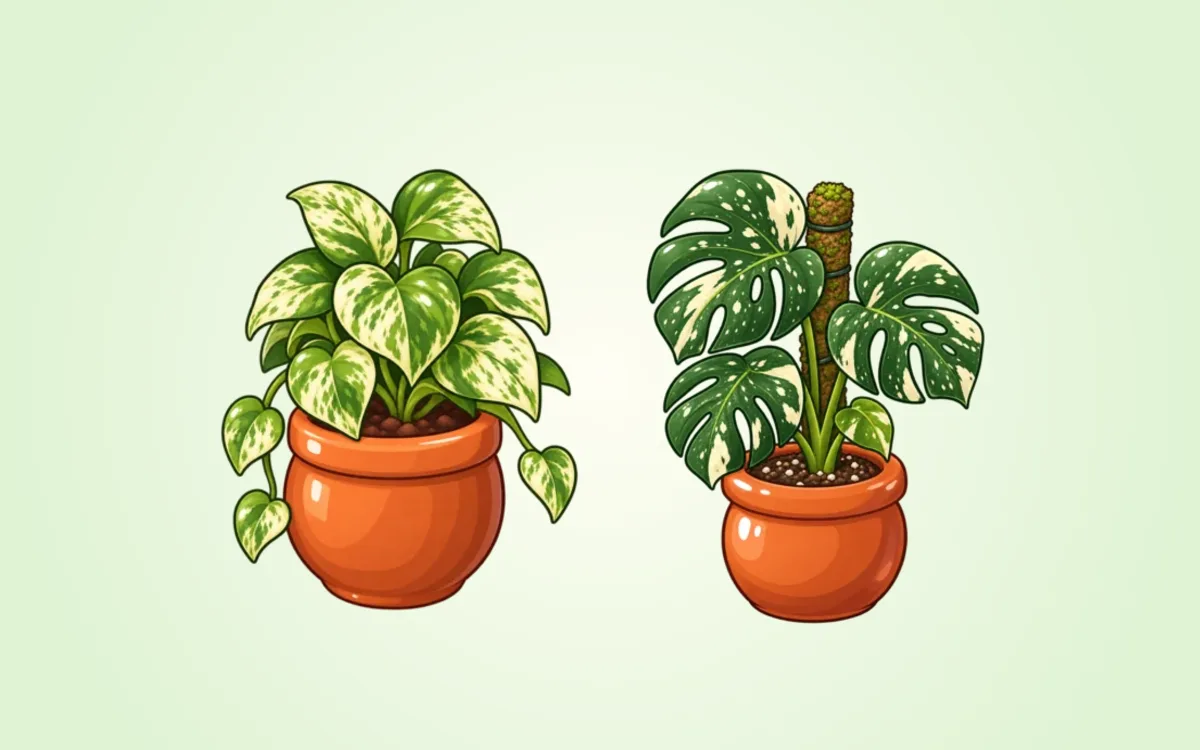
Overwatering is one of the most common causes of houseplant problems, according to the Missouri Botanical Garden. The issue is rarely how much water goes in at once. It’s how often. Roots need air as well as water, and a pot that never dries out can’t give them any. This guide shows you how to water by checking the soil instead of the calendar.
Why “Once a Week” Doesn’t Work
Illinois Extension lists what changes a plant’s water use: the type of plant, temperature, humidity, light, pot size, plant size, potting mix, and drainage. The same monstera drinks far more in a bright summer window than in a dim corner in January.
Pot material matters too. Clemson HGIC notes that unglazed clay pots dry out faster because water evaporates through their porous walls, while plastic and glazed pots hold moisture longer.
So if you like reminders, use a schedule as a prompt to check your plants, not to water them automatically.
How to Tell When a Houseplant Needs Water
Use one method or combine a few.
- The finger test. Push a finger into the mix up to the first knuckle. If it’s dry at your fingertip, most houseplants need water (Clemson HGIC). The Missouri Botanical Garden says most plants like the top inch to dry between waterings; Illinois Extension checks to about two inches.
- Lift the pot. Dry potting mix is noticeably lighter. Pick the pot up right after watering and again every few days, and you’ll learn the difference quickly.
- Look at the color. Moist mix is darker; it lightens as it dries.
- Tap a clay pot. A hollow sound means dry, a dull thud means moist (Clemson HGIC).
- Moisture meter. If you use one, take readings at several depths. The top of the pot dries before the bottom (Missouri Botanical Garden).
How to Water Houseplants the Right Way
Water deeply, less often
The Missouri Botanical Garden recommends watering well and less frequently instead of giving small sips. Here’s how:
- Pour slowly over the whole soil surface, not in one spot.
- Keep going until water runs out of the drainage hole. Clemson HGIC explains that this makes sure the bottom two-thirds of the pot, where most roots are, gets wet, and it flushes out excess salts.
- Let the pot drain, then empty the saucer. Don’t leave the plant sitting in water.
None of this works without a drainage hole. If your plant lives in a decorative cachepot, keep it in a nursery pot with holes inside, and tip out any water that collects after watering.
Bottom watering
Illinois Extension describes bottom watering: set the pot in a shallow container of water and let the mix soak it up until the surface is moist, then lift it out to drain. It’s useful for plants with fuzzy leaves that shouldn’t stay wet.
Rewetting bone-dry soil
Very dry potting mix repels water, so it runs straight down the sides of the pot. Clemson HGIC suggests watering once, then again after 30 minutes, or submerging the whole pot until the surface is moist and letting it drain completely.
What Water to Use
| Tip | Why | Source |
|---|---|---|
| Use room-temperature water | Cold water can damage plants, especially in winter | RHS, Illinois Extension |
| Let tap water stand 24 hours | Allows chlorine to dissipate | RHS |
| Don’t use softened water | Softeners add sodium, which can damage plants | Clemson HGIC, Missouri Botanical Garden |
| Rainwater or distilled for sensitive plants | Fluoride in tap water can brown leaf tips | Missouri Botanical Garden, NC State Extension |
Clemson HGIC gives 62–72°F as a good water temperature range. NC State Extension names Goeppertia orbifolia (formerly Calathea orbifolia) and spider plant (Chlorophytum comosum) among plants whose leaf tips can brown from tap-water fluoride.
Watering Needs by Plant Type
“Let the top dry out” covers most common houseplants, but some want drier conditions and some want more even moisture.
| Group | Examples | When to water | Source |
|---|---|---|---|
| Let mostly dry out | snake plant (Dracaena trifasciata), ZZ plant | When the mix is dry; much less in winter | NC State Extension |
| Let the top dry | pothos, monstera, heartleaf philodendron, alocasia | When the top layer dries; top 2 in for alocasia | RHS, NC State Extension |
| Keep lightly moist | calathea, prayer plant, peace lily | Evenly moist, never soggy | NC State Extension, RHS |
Some specifics: NC State Extension suggests watering a ZZ plant about twice a month in summer, and only once the soil has dried out completely, and about once a month in winter. For snake plant, let the soil dry between waterings from spring to fall, and water only every one to two months in winter. The RHS says to let a monstera get almost dry before watering thoroughly, and to water a little less often in winter.
Watering in Winter
Clemson HGIC notes that plants need less water when growth slows or they go dormant. In most homes that’s late fall through winter, when light is low. The RHS warns that alocasias need very little water during winter dormancy, and overwatering then easily leads to root rot. NC State Extension says prayer plants should dry out more in winter than in summer.
Overwatering vs. Underwatering: Symptoms
Both can look alike. An overwatered plant can wilt, as Illinois Extension points out, so always check the soil first.
| Symptom | Likely overwatering | Likely underwatering |
|---|---|---|
| Leaf spots | Soft, dark brown | Brown, dry, brittle |
| Lower leaves | Turn yellow and drop | Turn brown, dry up, drop |
| Stems | Soft, rotting at soil line | Unchanged, plant limp |
| Potting mix | Wet, may smell sour | Dry, pulling away from pot |
| Other | Slow growth, fungus gnats | Flower buds drop |
Symptoms based on the Missouri Botanical Garden’s houseplant factsheet. For more on leaf color changes, see yellow and brown leaves on houseplants.
A white crust on the soil surface or on a clay pot is, per the Missouri Botanical Garden, a sign of overfertilizing. Watering thoroughly until water drains out helps flush those salts.
Watering and Fertilizing
Fertilizer goes in with the water, so it pays to line the two up. The RHS recommends feeding mainly in the growing season, roughly March to October, with a liquid fertilizer once or twice a month, and no more than once a month in winter, when low light means plants can’t use the nutrients. The Missouri Botanical Garden says to feed only while plants are actively growing or flowering.
Watering Houseplants While You’re on Vacation
The RHS says most houseplants handle a few days without care, but absences of more than a week call for a plan. In winter, when growth is slow, plants can go a week or two without attention. For trips longer than two weeks, ask a neighbor or friend to water.
The RHS suggests:
- Water thoroughly before you leave so the mix is moist but not waterlogged.
- Move plants to a cooler room or away from a bright window so they dry out more slowly.
- Capillary matting. Lay it on the sink’s draining board or next to the bathtub, drape one end into water in the sink or tub, and press small pots onto the wet mat.
- Wicks. Put one end of a wick in a large container of water and tuck the other into the pot so the plant draws water gradually.
- A clear cover. A clear cover or propagator lid over the plant holds in moisture; keep it off the leaves.
Cacti and succulents, the RHS notes, tolerate long dry spells and don’t need any of this.
Common Watering Mistakes
- Watering on a fixed schedule without checking the soil.
- Leaving water in the saucer or cachepot. Roots sitting in water rot.
- Small daily sips. Only the surface gets wet, or the mix never dries at all.
- Pots without drainage holes. Excess water has nowhere to go.
- A pot that’s too big. A lot of mix with no roots in it stays wet for a long time. See how to repot houseplants.
- Dense potting mix. If water puddles on top for a long time, consider an airier blend, as covered in our aroid soil mix guide.
Quick Checklist
- Check the soil with your finger or by lifting the pot.
- If it’s dry enough for that plant, water with room-temperature water until it drains out the bottom.
- Empty the saucer after a few minutes.
- In winter, check less often and expect the mix to stay moist longer.
Something wrong with your plant? Try the symptom checker →
FAQ
How often should I water my houseplants?
There is no fixed interval. Plant type, temperature, light, humidity, pot size and material, and the potting mix all change how fast a plant uses water. Check the soil with your finger or by lifting the pot, and water when it is as dry as that plant tolerates.
Is bottom watering better than top watering?
Neither is better in general. Top watering until water runs out of the drainage hole also flushes out salts. Bottom watering is handy for plants with fuzzy leaves. Either way, let the pot drain afterward and never leave it standing in water.
Can I use tap water for houseplants?
Usually yes, at room temperature. The RHS suggests letting it stand in an open container for 24 hours so chlorine can dissipate. Avoid softened water. Fluoride-sensitive plants such as calatheas and spider plants may do better with rainwater or distilled water.
Why is my plant wilting even though the soil is wet?
Wilting can be a sign of overwatering. Roots sitting in soggy mix can rot, and rotted roots can't supply the leaves. Let the mix dry out, check the roots for soft brown rot, and water less often.
Should I water less in winter?
Yes. Most houseplants grow more slowly in winter's lower light and use less water. Keep checking the soil, but expect longer gaps between waterings.
Sources
- Clemson HGIC — Indoor Plants: Watering
- Missouri Botanical Garden — How to Water Indoor Plants
- Missouri Botanical Garden — Indoor Plants or Houseplants (factsheet, PDF)
- Illinois Extension — Houseplants: Watering
- RHS — How to grow houseplants
- RHS — Houseplants: holiday care tips
- RHS — How to grow Swiss cheese plants
- RHS — How to grow alocasias
- NC State Extension — Zamioculcas zamiifolia
- NC State Extension — Dracaena trifasciata
- NC State Extension — Goeppertia orbifolia
- NC State Extension — Maranta leuconeura
- NC State Extension — Chlorophytum comosum
Care information is general; every plant and home is different. Growing is simplified in the game.