 Rare Leaf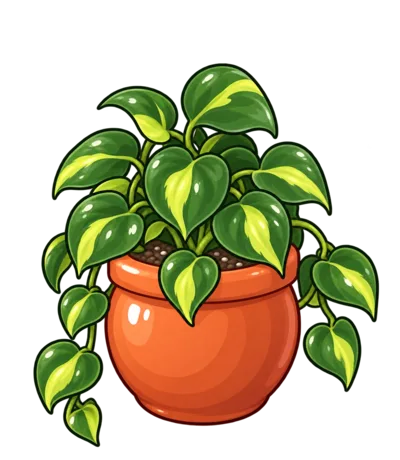
Heartleaf Philodendron Care: Low Light, Watering, Propagation, Brasil and Lemon Lime
Philodendron hederaceum · Araceae
Heartleaf philodendron (Philodendron hederaceum) is one of the oldest and most reliable houseplants around. It has glossy, heart-shaped leaves on long vines, copes with dim rooms and roots in a glass of water. The Missouri Botanical Garden calls it perhaps the most popular philodendron sold today.
How to identify heartleaf philodendron
Philodendron hederaceum is an evergreen vine in the arum family (Araceae). Kew’s Plants of the World Online gives its native range as Mexico to tropical America, including the Caribbean, where it grows as an epiphyte on trees. The species name means “ivy-like”, after its climbing habit. It’s also sold under the older name Philodendron scandens and as “Cordatum”.
What to look for:
- glossy, heart-shaped leaves with a pointed tip, about 4 inches long on young plants and up to 12 inches on mature ones (Missouri Botanical Garden),
- new leaves often unfurl bronze and quickly turn green,
- slender green stems with aerial roots; the plant trails or climbs,
- each new leaf comes with a stipule (a papery sheath) that dries and drops.
Philodendron vs. pothos: NC State Extension gives two reliable differences. Philodendron has conspicuous free stipules on new growth and smooth, non-grooved leaf stalks. Pothos (Epipremnum aureum) has grooved leaf stalks and no free stipules.
Light requirements
The RHS recommends bright, indirect light and protection from direct summer sun, which scorches the leaves. NC State Extension also notes that it can survive long periods in extremely low light, which is why it’s a staple in offices and darker rooms.
There’s a trade-off. In low light, both the RHS and the Missouri Botanical Garden say the plant gets leggy, with fewer and smaller leaves. For a full plant, move it closer to a window. For more options, see low-light houseplants.
How often to water
The RHS advises watering once the top of the potting mix has dried out. Never leave the pot standing in water, since soggy soil leads to root rot. NC State Extension suggests keeping the soil slightly moist and watering less in winter.
- In spring and summer, water regularly as soon as the surface dries.
- In fall and winter, water less often.
- The RHS recommends room-temperature rainwater or filtered water, especially where tap water is hard.
More in how to water houseplants.
Best soil and repotting
The RHS recommends a loose, free-draining, slightly acidic mix (pH 5–6): 2 parts orchid mix to 1 part peat-free ericaceous compost. The Missouri Botanical Garden suggests a simpler soil-based potting mix. Either works as long as it drains well. See aroid soil mix.
It can usually stay in its pot for at least a couple of years, until the roots are densely packed. Repot in spring into a pot only a few centimeters (an inch or so) wider.
Humidity and temperature
Good news for heated homes: the RHS says philodendrons prefer moderately humid air but are perfectly happy in normal household humidity. NC State adds that it tolerates dry air.
Keep it above 15 °C (59 °F). University of Florida guidelines recommend 70–80 °F (21–27 °C) indoors. Keep it away from radiators and cold drafts.
Fertilizing
Feed with a general houseplant fertilizer from April to September and not in winter. Dust the leaves now and then so they can use light efficiently.
How to propagate heartleaf philodendron
Heartleaf philodendron is propagated from stem cuttings. The RHS recommends taking them from spring to late summer.
- Cut a piece of stem about 10 cm (4 inches) long, just below a node, where a leaf joins the stem.
- Strip off the lower leaves so the node can sit in water.
- Stand the cutting in a glass of water in a bright spot. The RHS says roots appear in a couple of weeks.
- Once it’s well rooted, pot it up in a free-draining mix. Several cuttings in one pot make a fuller plant.
In spring you can cut long stems back just past a leaf node to encourage new shoots and a bushier plant, and the Missouri Botanical Garden also recommends pinching the trailing tips. Wear gloves when cutting, because the sap irritates skin. Other techniques are covered in houseplant propagation methods.
Heartleaf philodendron varieties
NC State Extension lists these cultivars:
- ‘Brasil’: a yellow to light green stripe down the center, dark green edges,
- ‘Cream Splash’: light green and cream center, dark green edges,
- ‘Gabby’: light green and cream leaves that may turn fully cream,
- ‘Lemon Lime’: bright yellow to chartreuse leaves,
- ‘Rio’: silver and cream center with dark green edges,
- ‘Silver Stripe’: cream to light green leaves with a silver stripe.
Variegated types need more light than the plain green form. If an all-green shoot appears, you can cut it off so it doesn’t outgrow the variegated growth; see variegation reversion.
Common problems
| Symptom | Cause | Fix |
|---|---|---|
| Yellowing leaves, wilting | overwatering, root rot | let it dry, empty the saucer, repot if roots are mushy |
| Long, thin stems with small leaves | low light | move closer to a window, cut stems back |
| Scorched patches | direct summer sun | move to indirect light |
| Brown papery sheaths on stems | stipules drying naturally | normal; remove gently if you like |
| Spots on leaves | fungal or bacterial leaf spot | remove affected leaves, keep foliage dry when watering |
| White fluff, brown bumps | mealybugs, scale | see mealybugs on houseplants |
| Fine webbing, speckled leaves | spider mites | see spider mites on houseplants |
| Clusters of small green or black insects on tips | aphids | rinse the plant, trim infested tips |
Is heartleaf philodendron toxic?
The ASPCA lists heartleaf philodendron as toxic to cats, dogs and horses. It contains insoluble calcium oxalates. Chewing it can cause oral irritation, pain and swelling of the mouth, tongue and lips, excessive drooling, vomiting and difficulty swallowing. If your pet chewed on it, call your vet.
The RHS warns that philodendron sap is a skin irritant, so wear gloves when pruning and keep the plant out of reach of children and pets. See houseplants toxic to cats and dogs.
FAQ
How do I tell heartleaf philodendron from pothos?
Philodendron has smooth, rounded leaf stalks, and each new leaf emerges from a sheath (stipule) that dries and falls off. Pothos has grooved leaf stalks and no free sheaths on new growth.
Can heartleaf philodendron grow in low light?
Yes, it tolerates low light for long periods. In very dim spots it produces long, thin stems with smaller leaves, so bright indirect light gives the fullest plant.
How often should I water a heartleaf philodendron?
Water once the top of the soil has dried out. Never leave it standing in water, and water less often in fall and winter.
How do I make my philodendron fuller?
Pinch back the trailing tips or cut long stems back just past a leaf node in spring. Root the cuttings in water and plant them back into the same pot.
Is heartleaf philodendron toxic to cats?
Yes. The ASPCA lists heartleaf philodendron as toxic to cats, dogs and horses because it contains insoluble calcium oxalates.
Is Philodendron cordatum the same as heartleaf philodendron?
In the houseplant trade, yes. The ASPCA lists Cordatum as another common name for Philodendron hederaceum, and it is also sold under the older name Philodendron scandens.
Sources
- ASPCA — Heartleaf Philodendron
- Kew POWO — Philodendron hederaceum
- RHS — How to grow philodendrons
- NC State Extension — Philodendron hederaceum
- Missouri Botanical Garden — Philodendron hederaceum
- UF/IFAS EDIS — Cultural Guidelines for Interiorscape Philodendron (EP150)
Care information is general; every plant and home is different. Growing is simplified in the game.