 Rare Leaf
Variegated Houseplants: What Variegation Is, Why It Reverts, and Why Rare Ones Cost So Much
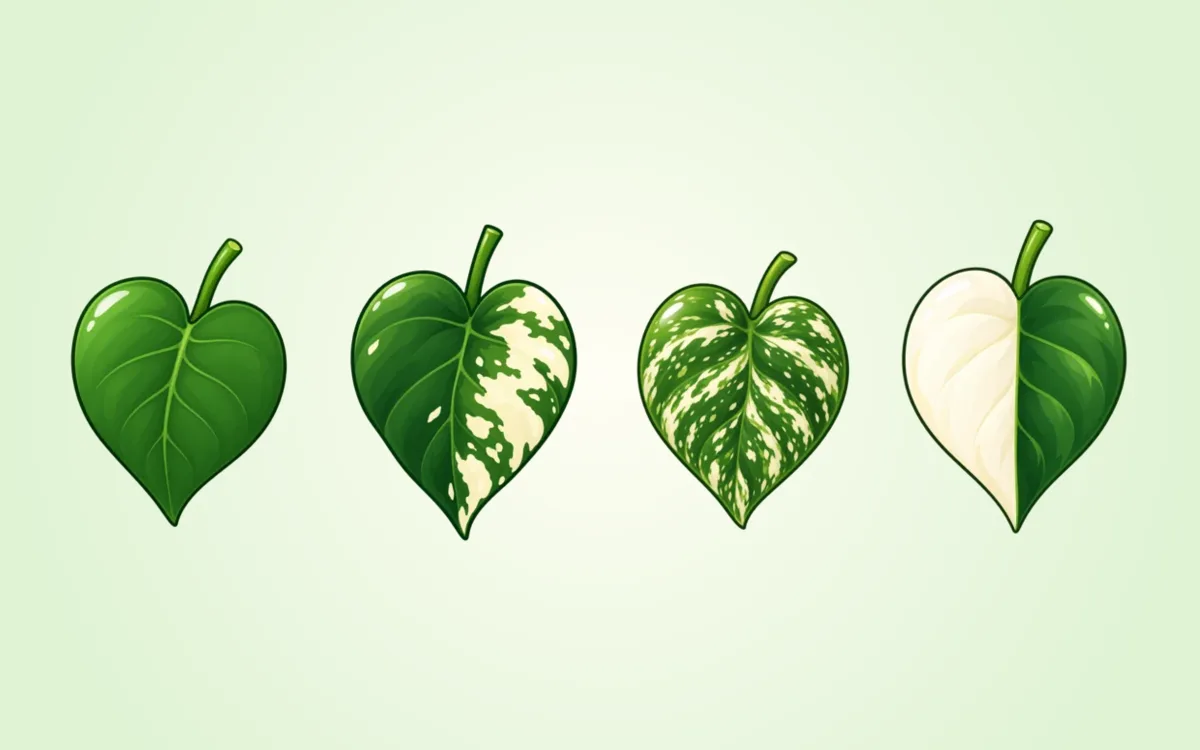
A Monstera with half of a leaf white as paper. A Philodendron splashed with pink. A pothos that looks like someone flicked cream across it. What these plants share is variegation, and it’s the reason a single cutting of the right plant can cost more than a whole shelf of green ones.
This guide explains what’s actually happening inside a variegated leaf, why some plants hold their pattern and others don’t, and what that means for care and for buying.
What is a variegated plant?
A variegated plant has leaves (sometimes stems too) with patches of a different color. In most collector houseplants, the pale patches are tissue that can’t make normal amounts of chlorophyll, the green pigment plants use for photosynthesis. Where chlorophyll is missing, you see white, cream, yellow, or, on some plants, pink.
Botanists at the University of Florida describe several different causes of variegation:
- Chimeras: a mutation in the growing tip (the meristem) leaves the plant with two genetically different groups of cells growing side by side. Most collector aroids with white or pink patches fall into this group.
- Pattern variegation: in some plants, the markings are built into their genes. Different cells in the leaf simply express color genes differently. This is an inherited trait and can come true from seed.
- Transposons (“jumping genes”): mobile bits of DNA that create mosaic patterns. This kind of pattern is also passed on through seed.
- Viruses: some viral infections cause mottling. That’s a disease, not a feature you want.
When people online talk about “variegated plants,” they almost always mean the first type: chimeras.
Why variegation slows a plant down
The white part of a leaf can’t do the plant’s job of turning light into sugar. A variegated plant therefore has fewer “solar panels” than its all-green relative. In practice, that means:
- Slower growth. Less chlorophyll means less energy for new leaves.
- Higher light needs. In UF/IFAS trials on pothos, very low light produced small leaves and variegated cultivars lost color. Strong direct sun is the opposite problem: it scorches the pale parts first.
- All-white growth doesn’t last. A leaf or shoot with no green can’t feed itself. The RHS notes that all-white shoots on variegated plants are weak and don’t take over the way green ones do.
Stable vs. unstable variegation
This is the distinction collectors care about most, and it comes down to where in the growing tip the mutation sits.
A plant’s growing tip is built in layers. University extension sources describe three kinds of chimera:
- Periclinal: the mutation covers one entire layer of the growing tip. This is the most stable type and the basis of many garden cultivars with neat, predictable white edges or centers.
- Mericlinal: the mutation covers only part of one layer. This type is unstable.
- Sectorial: the mutation runs through all layers, but only in a wedge of the growing tip. It’s also unstable and can produce normal shoots, mutated shoots, and everything in between.
With an unstable chimera, the way cells happen to divide at the tip decides what the next leaf looks like. The next leaf could be:
- almost entirely green (the plant is starting to revert),
- speckled or streaked at random,
- half green and half white: the famous half-moon leaf,
- entirely white. It looks spectacular, but it’s a dead end for the plant.
That unpredictability is why unstable plants give the most dramatic leaves and the most frustration. You never know exactly what a cutting will turn into.
Why variegated plants revert to green
Reversion means a cultivar produces shoots that look like its plain parent. The RHS explains that variegated plants start as mutations of green plants and are kept going by cuttings or division. The mutation isn’t always stable, so a plant can throw out all-green shoots.
Those green shoots are a problem because they have more chlorophyll. They grow faster and, if you leave them, can eventually take over the whole plant. The fix is the same for a garden shrub and a pothos on a shelf: cut the green shoot out, back to a stem that still carries variegated leaves. The RHS also points out that reversion can be a sign the plant needs more light.
We cover this in more depth in our guide to variegation reversion.
Why rare variegated plants cost so much
The price of variegated houseplants isn’t just hype. There are practical reasons behind it.
- They usually can’t be grown from seed. Chimeral variegation lives in the arrangement of cell layers, not in the plant’s genes as a whole, so seedlings don’t inherit it. The plant has to be multiplied vegetatively, from cuttings or in the lab.
- The cutting has to carry the variegation. A stem section with a purely green node will most likely grow into a green plant. A grower gets only a handful of “good” cuttings from each mother plant.
- They grow slowly. Less chlorophyll means fewer new leaves a year, so it takes longer to grow each plant to a sellable size.
- Demand is high. The RHS notes that variegated Swiss cheese plants such as ‘Variegata’ and ‘Albo-Variegata’ are particularly sought after, are much harder to find than the green form, and cost more as a result.
Tissue culture changes the math for some plants. Labs can multiply a plant from small pieces of tissue far faster than cuttings allow. Monstera deliciosa ‘Thai Constellation’ is the best-known example: Costa Farms says it’s believed to be a naturally occurring mutation that’s most often propagated in tissue culture labs. It isn’t a “lab-made” plant, but labs are how it reaches stores in numbers. Read more in our houseplant tissue culture guide and in Thai Constellation vs. Albo.
Well-known variegated houseplants
- Pothos (Epipremnum aureum): golden pothos is itself irregularly streaked with yellow, and ‘Marble Queen’ is marbled with white. UF/IFAS introduced ‘Pearls and Jade’ as a mutation selected from a group of ‘Marble Queen’ plants, which is a good example of how new variegated cultivars appear. See our pothos plant profile.
- Monstera (Monstera deliciosa): ‘Thai Constellation’ with creamy speckles and the white-sectored ‘Albo Variegata’. See the Monstera profile.
- Pink Princess philodendron (Philodendron erubescens ‘Pink Princess’): dark leaves with pink patches. Singapore’s NParks recommends pruning just above a variegated leaf to help keep the variegation balanced. See our Pink Princess care guide.
How to care for variegated houseplants
Every species has its own needs, but a few rules hold for almost all of them:
- Light: bright and indirect. An east- or west-facing window works well, or a spot set back from a south-facing window. Avoid harsh midday sun on the pale areas. Our houseplant light guide explains how to judge light in a room.
- Watering: let the top of the potting mix dry out between waterings. Overwatering kills more houseplants than underwatering. See how to water houseplants.
- Reverted shoots: if the plant starts producing only green leaves, cut that stem back above the last well-variegated leaf. The new shoot will grow from a node that still carries variegation.
- All-white leaves: leave them alone while they’re healthy. Remove them once they start to brown, since they give the plant nothing back.
- Propagation: always choose nodes that show variegation on both the leaf and the stem. Our step-by-step pothos propagation guide walks through it.
Are variegated plants toxic to pets?
Variegation doesn’t change toxicity. The ASPCA lists golden pothos, Monstera deliciosa, and several philodendrons as toxic to cats and dogs because they contain insoluble calcium oxalate crystals, which irritate the mouth and can cause drooling and vomiting. See our list of houseplants toxic to cats and dogs.
In the game
Rare Leaf Tycoon is built on exactly this tension. You propagate cuttings from a mother plant and only see the new leaf’s pattern once the cutting has grown. A stable line gives a predictable result (76% chance of a stable pattern). An unstable line is riskier but gives a better shot at a rare leaf (8% vs. 2%). Then you decide like a real collector: sell during a market bubble, fill a customer order, or keep the leaf for your herbarium. Growing is simplified in the game, and no plant ever dies.
FAQ
What does variegated mean on a plant?
A variegated plant has leaves with areas of different color, most often white, cream, or yellow patches where the tissue lacks normal green chlorophyll. The pattern can be speckles, streaks, edges, or whole halves of a leaf.
Can a variegated plant turn green?
Yes. Many variegated plants can "revert" and push out all-green shoots. Because green shoots have more chlorophyll, they grow faster and can take over, so cut them back to a stem that still carries variegated leaves.
Why are variegated plants more expensive?
Most variegated houseplants have to be propagated from cuttings or in tissue culture rather than from seed, and variegated forms tend to grow more slowly than green ones. Supply is smaller, and demand from collectors is high.
Do variegated plants need more light?
Usually, yes. Give them bright, indirect light. In low light, variegated pothos produce smaller leaves and lose color, while strong direct sun can scorch the pale parts of the leaf.
Can you grow a variegated plant from seed?
Generally not when the variegation comes from a chimera, which is the case for most collector aroids. Chimeral variegation is kept going by vegetative propagation, such as cuttings. Some patterned plants do pass their markings through seed, but those are a different type of variegation.
Sources
- RHS — Reversion in plants
- University of Florida IFAS PropG — Chimeras
- University of Florida IFAS PropG — Variegation
- University of Illinois Extension — Chimeras (Home, Yard & Garden Newsletter)
- UF/IFAS EDIS — Cultural Guidelines for Commercial Production of Interiorscape Epipremnum (EP151)
- UF/IFAS EDIS — New Florida Foliage Plant Cultivar: Pothos 'Pearls and Jade' (EP441)
- RHS — How to grow Swiss cheese plants
- RHS — Monstera deliciosa 'Thai Constellation'
- Costa Farms — Thai Constellation Monstera
- NParks Flora & Fauna Web — Philodendron 'Pink Princess'
Care information is general; every plant and home is different. Growing is simplified in the game.